Browsers
The Hidden Risk of Unmaintained Software Packages
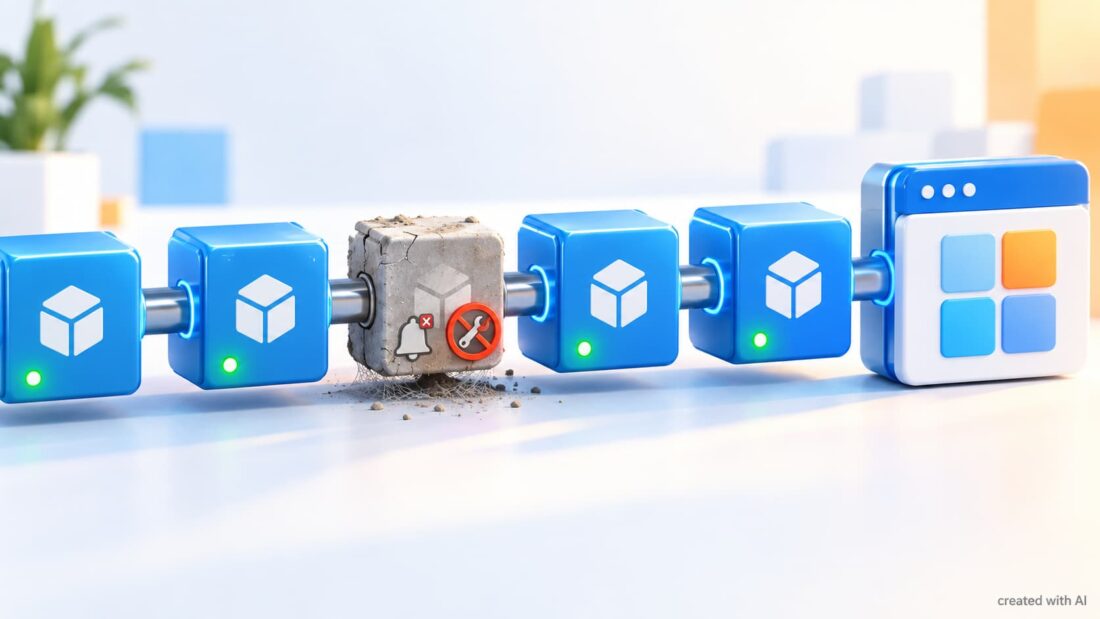
A green installation message can create false confidence. The registry found an artifact, the version constraints matched, and the files reached the project. None of those steps proves that anyone is reviewing bug reports, testing new runtime releases, or preparing a security fix. A dependency may work perfectly today while quietly becoming tomorrow’s migration emergency. Evaluating maintenance therefore belongs beside license, size, and technical fit when a team chooses open-source code.
Installation Tests Availability, Not Stewardship
Package managers answer a narrow question: can the requested version be resolved and downloaded? They do not call a maintainer, inspect the issue queue, or confirm that continuous integration still passes. A lockfile adds reproducibility by recording an exact dependency graph, but it preserves old decisions as faithfully as good ones.
That distinction matters because registry artifacts can remain available long after development stops. Even a formally deprecated package may continue to install. Successful installation is useful evidence about distribution, not evidence of active ownership.
Quiet Does Not Always Mean Abandoned
An old release date alone is a poor verdict. A small library that implements a settled file format may need few changes. Its tests can remain green, its API can stay compatible, and its maintainer may still answer the occasional report. Constant commits are not a requirement for healthy software.
Several signals become meaningful when read together:
| Signal | Benign explanation | Reason for concern |
| No recent release | The code is stable | Supported runtimes have moved ahead |
| Open issues | Reports need investigation | Reproducible bugs receive no reply |
| Old CI badge | Builds rarely change | The configured service no longer runs |
| One publisher | A focused small project | No backup can release an urgent fix |
| Stale dependencies | Updates add no value | Known flaws remain unresolved |
The pattern is more informative than any single row. A two-year-old release with current tests and responsive ownership can be safer than a frequently published package controlled by an opaque account.
Small Dependencies Can Carry Large Risk
Direct dependencies receive attention because developers choose them by name. Transitive packages arrive several levels deeper, often unnoticed. A modest application can consequently depend on hundreds of maintainers it has never evaluated.
The 2016 left-pad incident made that hidden structure visible. Removing a tiny npm package disrupted builds for projects whose dependency trees reached it indirectly. The lesson was not that small modules are inherently dangerous. It was that code size says little about operational importance, and a lockfile cannot supply a missing artifact or maintainer.
Security Work Continues After Features Stop
A feature-complete package still lives in a changing environment. New language versions appear, dependency vulnerabilities are disclosed, build services retire, and publishing credentials need protection. Without an active owner, an ordinary compatibility problem can wait indefinitely, while a security report may have no reliable recipient.
npm’s official deprecation documentation makes the distinction explicit: deprecation prints a message during installation, whereas unpublishing removes the package from the registry. In other words, availability and support are separate conditions. A warning deserves investigation even when the installation succeeds and the current test suite passes.
A Short Check Before Adoption
A maintenance review does not require a week of archaeology. Ten focused minutes can expose whether a candidate has credible ownership and whether the project can tolerate losing it.
- Read the latest release notes and compare supported runtimes with the application’s roadmap.
- Inspect recent issues for maintainer responses, not merely the number of open tickets.
- Confirm that automated tests run on current language and operating-system versions.
- Check how many people can publish releases and whether ownership changed unexpectedly.
- Review direct and transitive dependencies for unresolved security advisories.
- Identify a maintained alternative and estimate how tightly the application would couple to the API.
Automated evidence can accelerate the review. Security teams can use OpenSSF Scorecard to check open-source repositories for practices such as branch protection, dependency updates, token permissions, and maintained status. Its score is a starting point rather than a purchasing decision; context and manual inspection still matter.
Replace Carefully, Not Dramatically
Discovering an unmaintained package does not automatically justify an emergency rewrite. First map every use, add tests around current behavior, and isolate the dependency behind a small internal interface. That preparation makes alternatives easier to compare and limits changes across the codebase.
A temporary version pin may reduce surprise while replacement work proceeds, although it cannot create future fixes. Forking is sensible only when the license permits it and the organization can own testing, releases, vulnerability handling, and contributor review. Otherwise, a staged migration to a supported library is usually the more durable choice.
Installation proves that yesterday’s package can be retrieved. Maintenance evidence shows whether it has a dependable tomorrow. Treating those questions separately turns a routine dependency choice into a manageable engineering decision instead of a delayed crisis.
Mason
0